





Best AI code review tools
Eleven AI pull request reviewers compared on effective cost per review, git hosts, automatic reviews, fix loops and PR workflows.

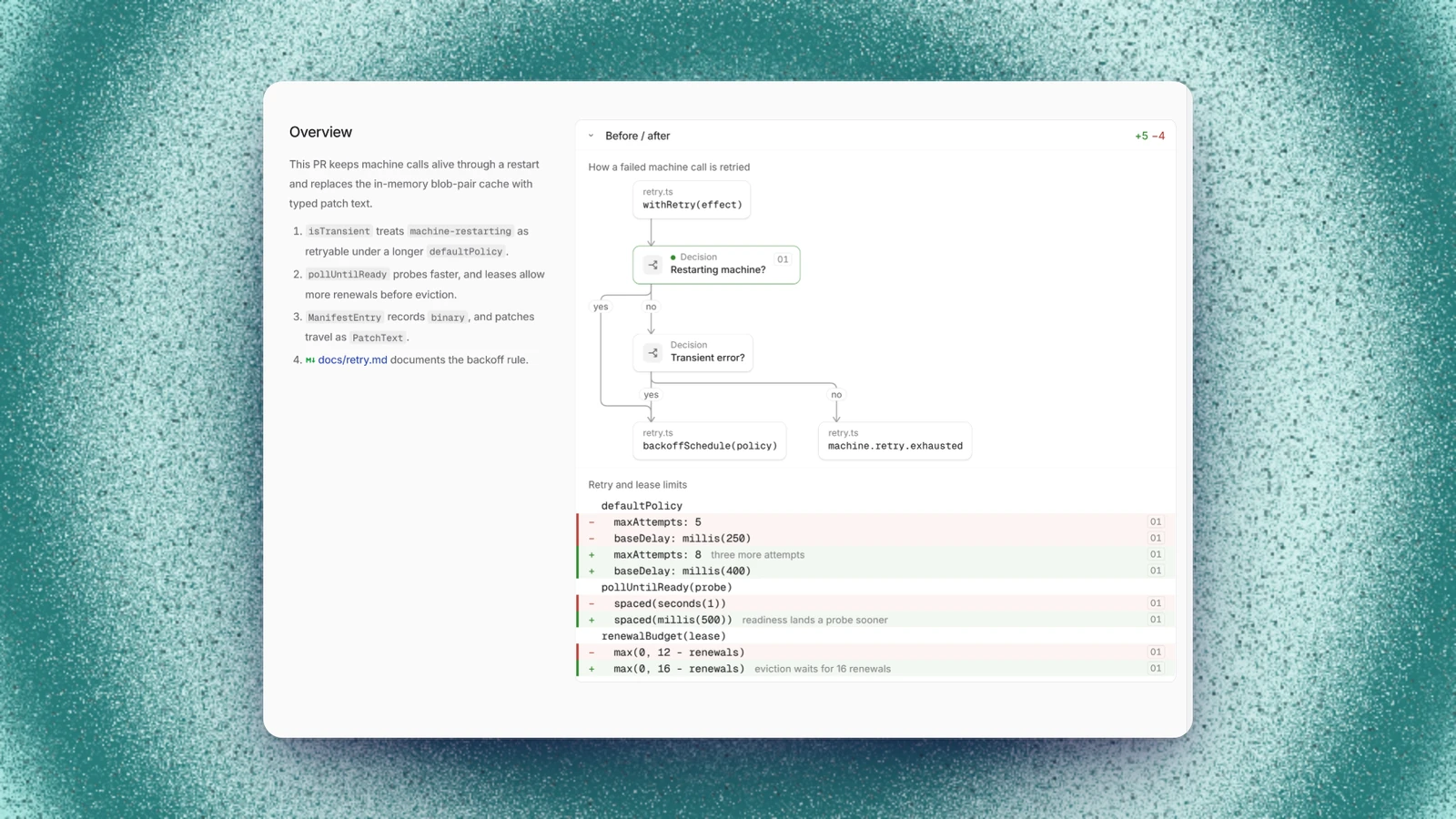
Picking an AI code reviewer comes down to four practical splits: which git hosts your repositories live on, what happens after a finding lands, how the review UI handles daily triage, and whether billing tracks seats or review volume. Today’s tools fall into standalone reviewers built across multiple git hosts and review agents built into coding platforms.
This guide compares eleven AI code review tools from their own documentation and pricing pages: Capy, CodeRabbit, GitHub Copilot code review, Cursor Bugbot, Greptile, Gitar, Qodo, Graphite, Devin Review, Codex code review and Sourcery. No synthetic benchmark scores or quality rankings, just documented hosts, triggers, fix loops, review workflows and effective cost per review.
Capy facts were verified on November 23, 2026 against Capy’s docs and product; competitor facts come from each product’s own docs, pricing page or changelog, verified on November 20, 2026.
Effective cost per review: $0.40 on Capy vs per-credit and per-seat tools
To compare per-seat plans and credit plans fairly, take a 10-developer team opening 250 pull requests a month (25 per engineer) using each product’s published rates. On Capy pricing, every plan includes unlimited members at $0 per seat and returns its full monthly price as model usage on top of machine minutes and review credits. Lite ($20 a month, $16 annually) includes 250 review credits (50 Medium reviews), Pro ($100, $80 annually) includes 1,250 (250 Medium reviews) and Max ($200, $160 annually) includes 2,500 (500 Medium reviews). Across all three plans, each Medium review works out to $0.40 on monthly billing ($0.32 annually), and follow-up reviews under Flex run at Low (1 credit, or $0.08 effective). This example counts first reviews only; follow-up reviews past the included credits are usage-based.
| Tool | Billing | 10 devs / mo | Per review |
|---|---|---|---|
| Capy | $0/seat credits | $100 (Pro) | $0.40 (first) |
| Greptile | Shared credits | $250 to $2,500 | $1 to $10 |
| GitHub Copilot | Seat + credits | Usage-based | ~$0.25 to $10 |
| Qodo | Pooled credits | $0.015/credit | Usage-based |
| Sourcery | Per developer | $120 to $240 | $0.48 to $0.96 |
| CodeRabbit | Per developer | $240 to $720 | $0.96 to $2.88 |
| Gitar | Per user | $200 to $400 | $0.80 to $1.60 |
| Graphite | Per user | $400 (Team) | $1.60 |
| Cursor Bugbot | Bundled seat | $300+ (Teams) | $1.20+ |
| Devin Review | Devin credits | $80 (Teams) | Usage-based |
| Codex | Bundled seat | $200 (Business) | $0.80 |
Per-seat rows use annual billing and include re-reviews: Sourcery Pro ($12 per developer) and Team ($24), CodeRabbit Essentials ($24), Team ($48) and Advanced ($72), Gitar Core ($20) and Pro ($40, up to 50 users), and Graphite Team ($40 for unlimited AI reviews; Starter is $20 with limited reviews). Capy’s $100 Pro row covers the first Medium review on all 250 pull requests (1,250 credits); follow-up reviews past the included allowance are usage-based. Greptile Pro bills $1 per shared credit with $0 seats (Base 1 credit, Plus 3, Apex 10; Starter is free for one developer with 50 credits), GitHub Copilot estimates ~$0.25 for Lite, ~$1.50 for Balanced and ~$10 for Max in AI credits (Pro starts at $10 per user with $15 in credits) plus private-repo GitHub Actions minutes, and Qodo Pro Team pools credits at $0.015 each with a self-set overage cap (credits per review vary). Bundled and credit-plan tools follow their platform terms: Cursor Bugbot is included on Cursor Teams ($30+ per user) and Premium ($30) through Ultra ($200), Codex is included on ChatGPT Plus ($20 a month) and Business ($20 per user annually, $25 monthly) for P0 and P1 issues only, and Devin Review starts with a 14-day trial before drawing credits from a Devin plan (Free $0, Pro $20, Max $200, Teams $80 a month for up to 100 users; public GitHub pull requests review free).
The gap grows on smaller teams or lighter review volume. Five engineers opening 50 pull requests a month pay $20 on Capy Lite for the first review on each PR ($0.40 per Medium review, plus $20 of model usage and 30,000 machine minutes), compared with $50 on Greptile Base ($150 Plus), roughly $75 in Copilot Balanced AI credits before Actions minutes, $120 on CodeRabbit Essentials annual ($2.40 per review) or $240 on CodeRabbit Team ($4.80 per review).
Flat per-seat pricing flips when a small team ships high pull request volume per engineer. Five developers opening 300 pull requests a month stay at $60 on Sourcery Pro ($0.20 per review) and $120 annual on CodeRabbit Essentials ($0.40 per review before usage-based overages), while credit plans scale with review count regardless of how many humans or coding agents open branches.
Capy reviews GitHub.com pull requests automatically and bills per review
Capy is a cloud coding-agent platform with a dedicated review agent built in. Set each repository’s mode in Settings → Review to Off, Once (the first review when a pull request opens) or Every push, or trigger a round from Capy’s UI, by commenting @capy review on GitHub (trailing text becomes extra instructions, such as @capy review focus on the migration) or through POST /api/v1/reviews. Pushing commits mid-review starts a fresh round against the new head.
The review agent checks out the repository at the pull request’s exact head and posts findings at or above the repository’s threshold (medium by default) as inline GitHub comments while recording every finding in Capy. Each finding gives a failure scenario with a category (Bug, Risk, Maintainability or Refactor), a severity (High, Medium or Low), a confidence (confirmed when the diff and traced context prove the defect, or investigate when it is a concrete risk with a verification target), and the file and line. It reads AGENTS.md files and enforces those conventions as findings alongside logic bugs.
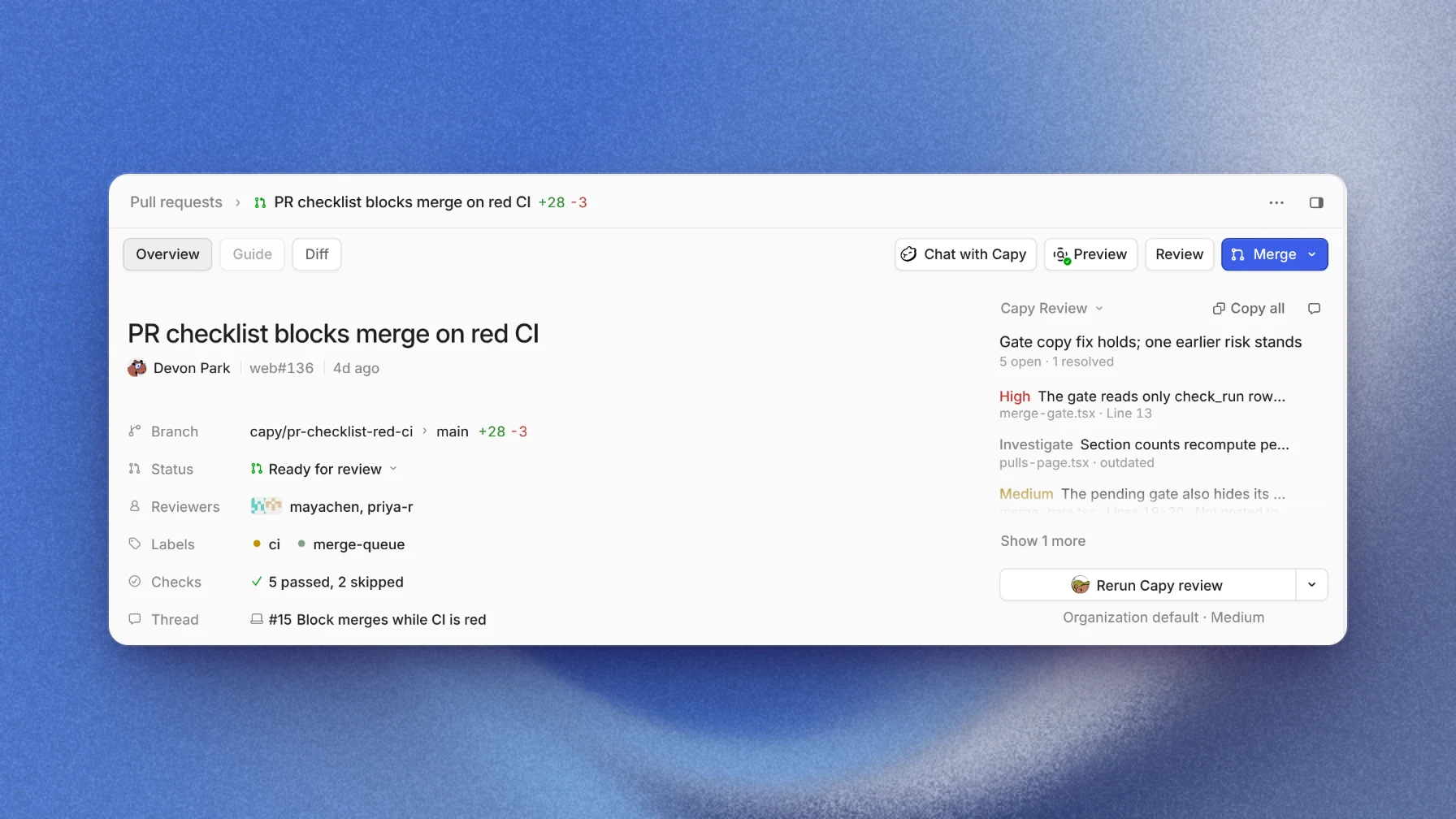
Every finding carries a triage status: Open, Resolved or Irrelevant. Marking a finding resolved or irrelevant resolves the GitHub review thread automatically, and re-reviews run incrementally on code changed since the last reviewed head with the whole pull request as context, never re-flagging irrelevant items while re-opening a resolved issue if the fix didn’t hold. When a Capy thread owns a pull request (it opened it, pushed to it or someone mentioned @capy), that thread triages each round and fixes high-severity findings, failing CI, review feedback and merge conflicts before reporting ready; you can override any triage decision. On unowned pull requests, Capy posts inline findings and leaves edits to you.
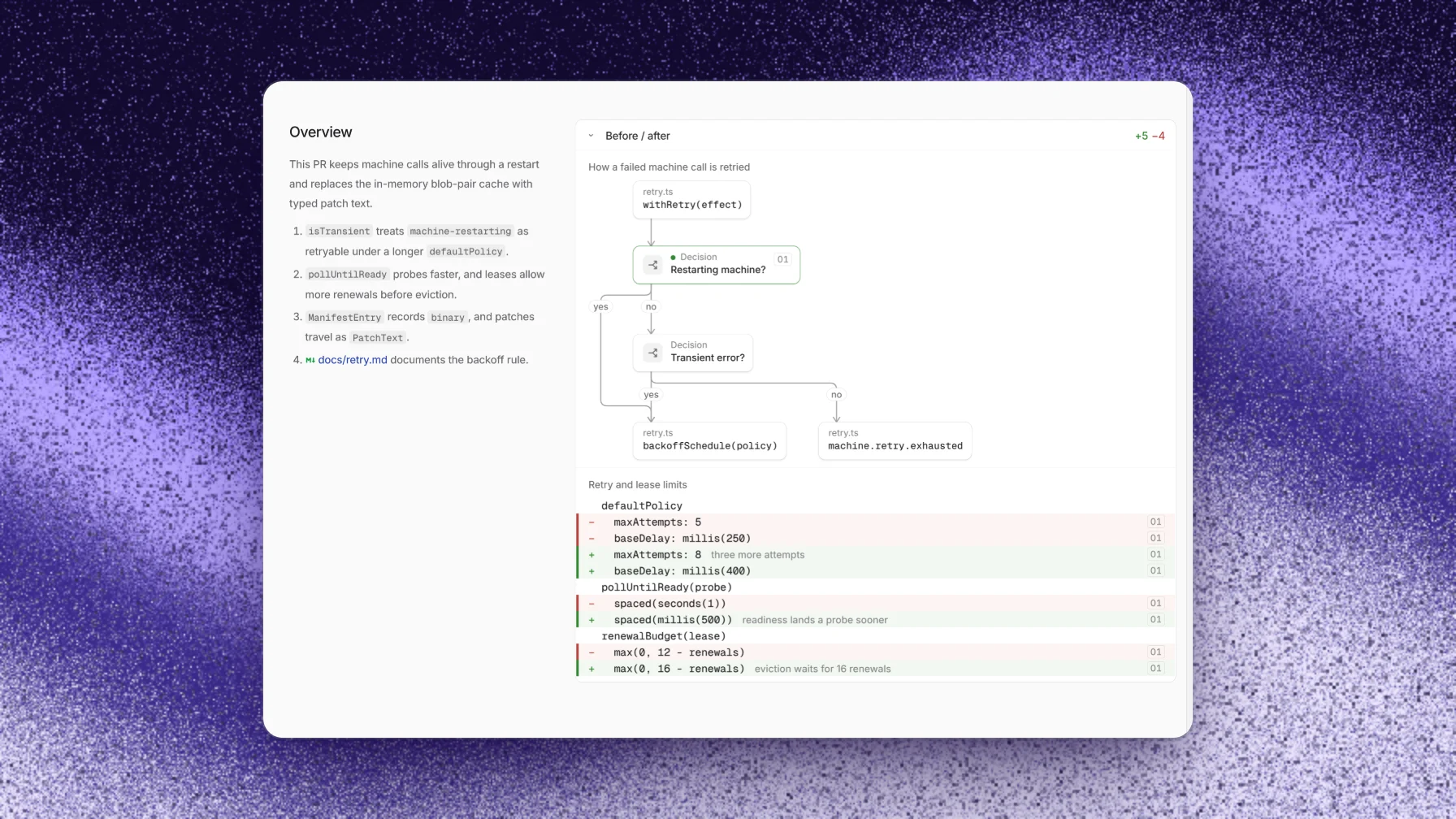
Capy’s Pull requests page lists every pull request across your organization’s projects with its CI and review state, and teams running Capy Captains can filter that board by Captain to see every pull request a crew opened. Opening a pull request in Capy shows Overview, diff, checks, findings and an auto-generated Guide: what the change does, a before-and-after diagram of the path it touches, and the change in chapters, each with its own diff (admins can turn Guides off).
Capy supports GitHub.com only and does not connect to GitHub Enterprise Server, GitLab, Bitbucket or Azure DevOps. Every plan covers unlimited members at $0 per seat: Free ($0) runs locally on your computer with your own subscriptions and API keys plus 100 monthly review credits, Lite ($20 a month, $16 annually, $1 for the first 7 days with a verified card) includes 250 review credits, Pro ($100, $80 annually) includes 1,250, Max ($200, $160 annually) includes 2,500, and Enterprise is custom. Paid plans also return their full price as model usage plus monthly machine minutes (30,000 Lite, 150,000 Pro, 300,000 Max).
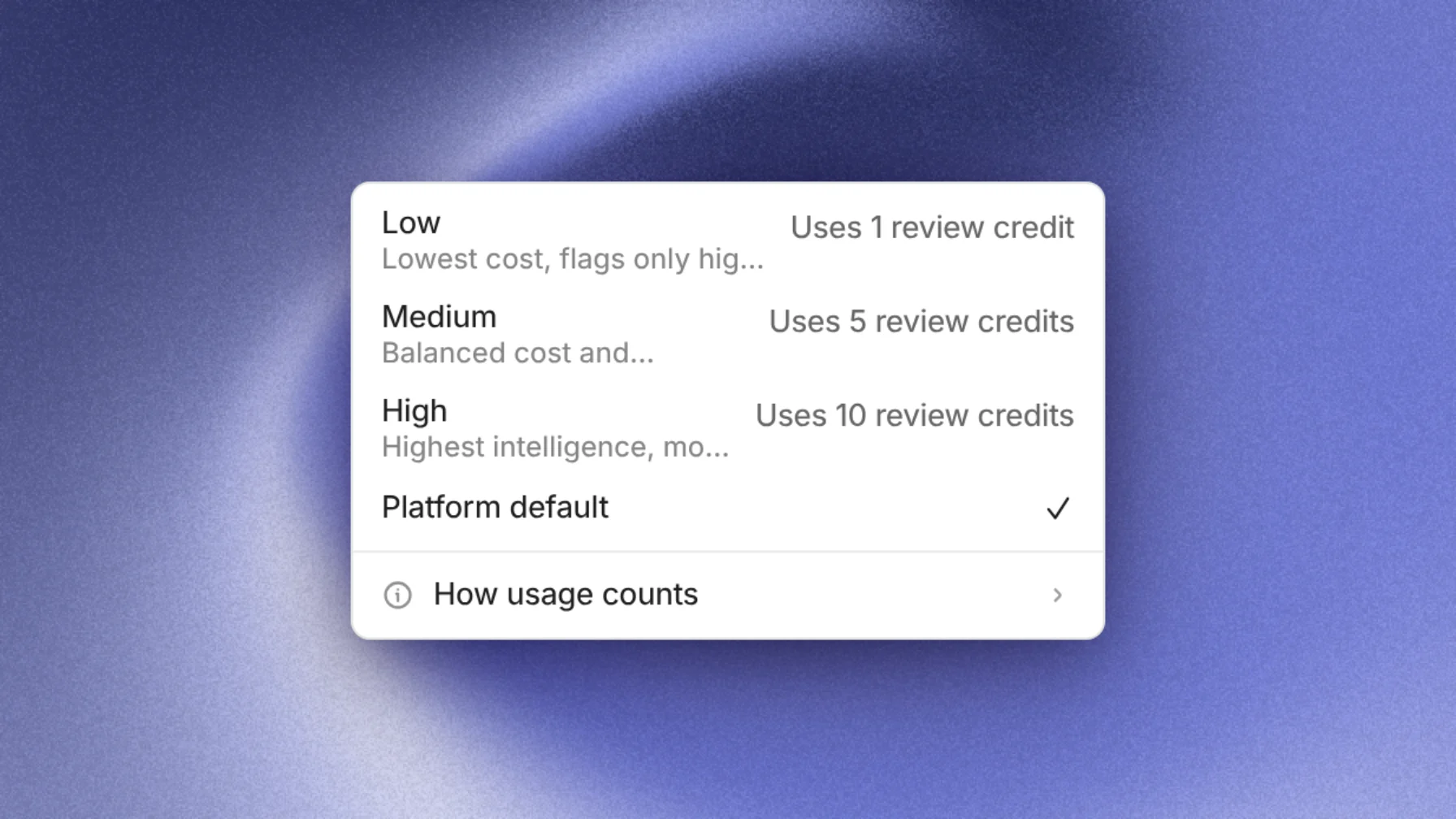
Every review credit covers both the model and the machine: Low uses 1 credit, Medium uses 5 credits and High uses 10 credits. By default (Flex), a pull request’s first review runs at Medium (5 credits) and follow-up reviews on later pushes run at Low (1 credit each).
Review credits reset monthly. Past your included allowance, overage reviews are usage-based, billed to Capy credits for actual model tokens and machine time, and reviews never run on connected subscriptions or API keys. For coding agents, connected Codex, GitHub Copilot and SuperGrok subscriptions plus your own API keys and gateways work on every plan, including Free, with no charge or markup; on Capy credits, models from Anthropic, OpenAI, Google and xAI bill at the provider’s list price. Capy is SOC 2 Type II on every plan, runs locally via its desktop app and Dock CLI (capy dock) with no machine-time charge, and offers BYOC on request, zero data retention on request, SSO/SAML (included on Enterprise; $100 a month on Lite, Pro and Max), an admin audit log and 24/7 engineering support in Slack Connect backed by an SLA. For a head-to-head breakdown, see Capy vs CodeRabbit.
CodeRabbit covers six git hosts and charges per developer
CodeRabbit connects to six git platforms: GitHub, GitHub Enterprise Server, GitLab, Bitbucket Cloud, Bitbucket Data Center and Azure DevOps, reaching private-network instances without inbound network access. Per CodeRabbit’s FAQ, pre-PR reviews also run through a VS Code extension, a JetBrains plugin in beta and a CLI. It enforces repository code guidelines including AGENTS.md.
On Essentials and up, CodeRabbit Fix comments applies changes for unresolved findings and pushes a commit to your branch, or opens a stacked pull request via @coderabbitai fix comments stacked pr. On GitHub, a Fix comments checkbox sits in the review comment, and Autofix applies ongoing repairs, turned on with @coderabbitai autofix or, on GitHub, a checkbox in the walkthrough.
CodeRabbit’s plans bill per developer: Essentials is $24, Team is $48 and Advanced is $72 per developer a month billed annually ($30, $60 and $90 monthly), with Enterprise through sales. Free covers PR summaries plus VS Code and CLI reviews, open-source projects get Team features free, and usage-based reviews can be enabled past included limits. Self-hosted CodeRabbit is available on Enterprise for 500 or more seats. Pick CodeRabbit for multi-host coverage, IDE/CLI pre-PR reviews or free open-source Team features.
GitHub Copilot code review runs inside GitHub, IDEs and Azure DevOps
GitHub Copilot code review flags issues and suggests fixes you can apply in a couple of clicks across GitHub.com, GitHub CLI, GitHub Mobile, VS Code, Visual Studio, Xcode, JetBrains IDEs and Azure DevOps. Automatic review turns on per repository, and Business and Enterprise admins can enable AI credits paid usage and the unlicensed-member policy so unlicensed members’ GitHub.com pull requests get reviewed too. In public preview, you can pass review suggestions to Copilot cloud agent to open a pull request against your branch with fixes applied.
Effort can be set to Lite, Balanced, Max or Adaptive (within a configured ceiling), with GitHub estimating AI credit costs of roughly $0.25 average for Lite ($0.05 to $1), $1.50 for Balanced ($0.25 to $5) and $10 for Max ($1.50 to $25), excluding Actions minutes.
Since June 1, 2026, per GitHub’s changelog, reviews on Pro, Pro+, Business and Enterprise bill AI credits and consume GitHub Actions minutes on private repositories. Per GitHub’s docs, self-hosted runners consume no Actions minutes. On GitHub Copilot’s plans, Free ($0) excludes code review, while Pro ($10 per user a month with $15 in monthly AI credits), Pro+ ($39 with $70) and Max ($100 with $200) include it. Pick Copilot when your team already pays for it or runs self-hosted Actions runners.
Cursor Bugbot reviews across five git hosts and spawns cloud autofix VMs
Cursor joined SpaceX in an acquisition that closed on August 14, 2026. Its Bugbot reviewer checks pull requests for bugs, security issues and code quality on every update or when you comment cursor review or bugbot run, posting explanations, fix suggestions and Fix in Cursor or Fix in Web links opening in Cursor or cursor.com/agents.
It connects to Cursor’s Origin, GitHub (including GitHub Enterprise Server), GitLab (including self-hosted), Bitbucket (including Data Center) and Azure DevOps. Checked-in .cursor/config/bugbot.yaml files configure effort (low, default, high or smart) and autofix mode (disabled, newBranch or existingBranch). Bugbot Autofix, generally available since February 26, 2026, spawns cloud agents in their own VMs to test changes and propose fixes on the pull request.
Per Cursor’s pricing, Bugbot is included on Premium ($30 a month), Super ($100), Ultra ($200) and Teams ($30+ per user a month), while Free and Plus ($8) exclude it. Pick Bugbot when your team already pays for Cursor Premium or Teams and wants cloud autofix VMs across five git hosts.
Greptile builds a repository graph and bills $1 per shared credit
Greptile builds a graph of your entire repository (functions, classes and dependencies) to trace how pull request changes affect the rest of the codebase. It posts inline findings with suggested fixes, learns from team reactions and replies, and puts a Fix with your Agent button on each comment (plus Fix All in the summary) that sends file paths, line numbers and suggested code to Claude Code, Codex, Conductor, Cursor or Devin.
Greptile supports GitHub, GitLab, Bitbucket and Cursor Origin (beta) in the cloud on every plan; Enterprise adds GitHub Enterprise Server, GitLab Self-Managed, Bitbucket Data Center, Gitea and Perforce with P4 Code Review on on-premises deployments. Enterprise also offers self-hosting via Docker Compose, Kubernetes or air-gapped deployments.
Greptile’s pricing uses shared credits with no seat fees on Pro: Starter is free for one developer with 50 credits a month, Pro bills $1 per credit shared across the org (Base uses 1 credit, Plus uses 3, Apex uses 10), Enterprise is custom, and qualified non-commercial open-source projects are free. Pick Greptile for no-seat credit pricing on GitHub, GitLab or Bitbucket Cloud, Enterprise coverage of Gitea, Perforce and self-managed hosts, or one-click handoff to external coding agents.
Gitar pairs pull request review with an autonomous CI fix loop
Gitar is now Sonar’s code change verification agent. Beyond pull request review, Gitar separates real CI failures from flaky tests, applies fixes under your supervision and iterates until CI passes, committing only on green.
Gitar’s pricing bills per user a month for up to 50 users. Core costs $20 per user a month billed annually ($25 monthly) for PR summaries, on-demand fixes and CI diagnosis on GitHub Actions and GitLab Pipelines. Pro costs $40 per user a month annually ($50 monthly) and adds the autonomous CI-until-green fix loop, rule-based auto-approval and merge blocking, and CI analysis for CircleCI, Buildkite and Bitrise. Enterprise adds self-hosted code hosting and BYOK LLM, and open-source projects on GitHub or GitLab get Pro free. Pick Gitar when red or flaky CI runs are your main bottleneck.
Qodo runs multi-agent reviews on a pooled credit budget
Qodo’s code review uses specialized AI agents reading your full repository, history and standards, triggering on publish or every push. Severity-ranked findings explain what, why and how to fix; you can discuss or dismiss them, accept one-click committable suggestions or let Qodo apply edits directly via Remediate findings.
Qodo installs on GitHub, GitLab, Bitbucket Cloud, Bitbucket Data Center and Azure DevOps. Qodo pricing bills $0.015 per credit pooled across the team on Pro Team, monthly with no annual commitment and a customer-set overage cap after a no-card free trial. There is no permanent free tier (open-source projects can apply via Qodo for Open Source), and Enterprise adds SSO/SAML, BYOK LLM and single-tenant SaaS or on-premises deployment. Pick Qodo for pooled credits with a hard self-set spending cap across multi-host repos.
Graphite bundles AI reviews with stacked pull requests and a merge queue
On December 19, 2025, Cursor announced that Graphite had agreed to join Cursor while operating independently, and Cursor is now part of SpaceX. Graphite Agent reviews every pull request and suggests fixes inside a GitHub platform centered on stacked pull requests (CLI and VS Code extension), a pull request inbox and a merge queue.
Per Graphite’s pricing, Graphite supports GitHub only, adding GitHub Enterprise Server on Enterprise. On annual billing, Hobby is free for personal repos (limited AI reviews), Starter is $20 per user a month (limited AI reviews), Team is $40 per user a month (unlimited AI reviews and customizations), and Enterprise is custom. Pick Graphite when your GitHub team wants stacked PRs, an inbox and a merge queue alongside unlimited reviews.
Devin Review groups diffs into an interactive guide and hands edits to Devin
Devin Review groups related changes in a pull request, explains them alongside the diff and flags issues via Bug Catcher (Bugs, Flags and Security). Trigger reviews with /devin review on GitHub or GitLab, turn on automatic reviews, open PRs from Devin (including GitHub Enterprise or Azure DevOps by URL) or swap github.com for devinreview.com to view public PRs without an account.
To fix a finding, edit the code yourself, ask Devin in review chat or post /devin fix the failing test to launch a Devin session. Devin Review starts with a free 14-day trial and then uses credits from a Devin plan: Free $0, Pro $20 a month, Max $200, Teams $80 a month (up to 100 users) and custom Enterprise; public GitHub PRs review free at devinreview.com. Pick Devin Review when you already run Devin or want quick grouped walkthroughs on GitHub and GitLab.
Codex code review flags P0 and P1 issues inside ChatGPT plans
OpenAI’s Codex GitHub integration reviews pull requests on @codex review or automatically via Codex settings, posting a standard GitHub review scoped strictly to P0 and P1 issues. It follows Code Review Rules sections in root and nested AGENTS.md files, offers a Security Review pass in research preview, and Codex cloud also supports GitLab in beta with merge request reviews.
Per Codex pricing, automatic GitHub review is a cloud feature included in ChatGPT plans from Plus ($20 a month) and up; API-key Codex sessions exclude it. Pick Codex when your engineers already pay for ChatGPT Plus or higher and want low-noise P0/P1 checks on GitHub or beta merge request reviews on GitLab.
Sourcery reviews GitHub and GitLab pull requests from $12 per developer
Sourcery posts summaries and diagrams, one-click fixes, custom review rules, low-risk auto-approval and security checks across GitHub and GitLab (GitLab.com and self-managed GitLab on every plan, with GitHub Enterprise Server and self-hosting on Enterprise).
Public repositories are free on the Open Source plan. Private repositories cost $12 per developer a month billed annually on Pro ($15 monthly), and $24 annually on Team ($30 monthly), adding nightly security scans across 50 repositories. Pick Sourcery for low flat per-seat pricing on GitHub or self-managed GitLab, free public repos or bundled nightly security scans.
Which AI code review tools apply fixes automatically like Gitar
If you want a reviewer that writes code after flagging a defect, these eleven tools split into three patterns:
- Autonomous CI fix loops. Gitar Pro edits your pull request, separates real failures from flaky tests, iterates until CI passes and commits on green (Core fixes on demand).
- Autofix commits and cloud VMs. Cursor Bugbot Autofix spawns cloud VMs to test and propose fixes (
disabled,newBranchorexistingBranchinbugbot.yaml). CodeRabbit’s Fix comments pushes commits or stacked PRs via@coderabbitai fix comments stacked pr, and Autofix applies ongoing repairs automatically. - Owning agents, direct remediation and handoffs. On Capy, the owning thread (one that opened, pushed to or joined the PR via
@capy) triages every review and fixes high-severity findings, failing CI, feedback and conflicts before reporting ready; unowned PRs get inline comments. Qodo applies fixes via Remediate findings, Copilot passes suggestions to Copilot cloud agent (public preview), Devin Review edits from chat or/devincomments, Greptile hands issues to Claude Code, Codex, Conductor, Cursor or Devin, Sourcery offers one-click fixes and Graphite Agent suggests inline edits.
Where other reviewers fit better than Capy
Capy fits GitHub.com teams that want $0.40 Medium reviews from included credits, synced GitHub triage and a Pull requests board, while other tools hold specific edges:
- Non-GitHub hosts. Capy supports GitHub.com only. CodeRabbit, Cursor Bugbot and Qodo cover GitLab, Bitbucket, Azure DevOps and GitHub Enterprise Server; Greptile adds Gitea and Perforce on Enterprise; Sourcery supports GitLab.com and self-managed GitLab on every plan; and Codex adds GitLab merge request reviews in beta.
- Self-hosted or air-gapped deployments. CodeRabbit (500+ seats), Greptile (Docker Compose, Kubernetes or air-gapped), Qodo (single-tenant SaaS or on-premises) and Sourcery offer self-hosted Enterprise tiers, and Gitar Enterprise supports self-hosted code hosts. Capy pairs its desktop app and Dock CLI (
capy dock, running locally on your machines at $0 machine time) with SOC 2 Type II on every plan, plus Enterprise bring-your-own-cloud (BYOC) on request, zero data retention on request, SSO/SAML, an admin audit log and 24/7 engineering support in Slack Connect backed by an SLA on its enterprise plan. - Pre-PR editor and CLI reviews. CodeRabbit (VS Code, JetBrains beta, CLI) and GitHub Copilot (VS Code, Visual Studio, Xcode, JetBrains, GitHub CLI) review code locally before a pull request opens.
- Autonomous CI-until-green loops on human PRs. Gitar Pro runs an autonomous CI fix loop on any pull request, whereas Capy fixes findings automatically only on pull requests owned by a Capy thread.
- Stacked pull requests and a merge queue. Graphite bundles unlimited AI reviews on Team with stacked PRs, an inbox and a merge queue.
- Free open-source tiers and high-volume small teams. CodeRabbit, Greptile, Gitar, Qodo and Sourcery offer free plans for qualifying open-source repos, and flat per-seat plans like Sourcery Pro ($12/dev) can cost less than credits when a small team opens very high PR volume per engineer.
Run two AI code reviewers side by side before you switch
Pricing tables narrow the field, while your own pull requests show which reviewer catches real bugs without flooding threads. Because each tool comments under its own account, install a second reviewer on a few active repositories and leave your existing bot on for a week or two.
Start on Capy Free (100 monthly review credits at $0, no per-seat fee) or Lite ($1 for the first 7 days with a verified card), enable Once or Every push in Settings → Review, and keep your conventions in AGENTS.md. Capy, CodeRabbit and Codex all enforce AGENTS.md, letting you compare findings, fix loops and billing on identical diffs before turning off the extra bot.
Frequently Asked Questions
Does Capy AI review pull requests automatically?+
What is the cheapest AI code review tool for a team?+
How do Capy’s review credits and Flex mode work?+
Does Capy support GitLab or only GitHub?+
What are the closest CodeRabbit alternatives?+
What AI code review tools automatically apply fixes like Gitar?+
Can AI code review replace human reviewers?+
Can you run two AI code review tools on the same repository?+
Why isn’t Ellipsis on this list?+
Sources
- Capy docs: Reviews
- Capy docs: Pull requests
- Capy docs: Models and pricing
- Capy docs: GitHub
- CodeRabbit docs: Plans
- CodeRabbit docs: Git platforms
- CodeRabbit docs: Fix comments
- CodeRabbit docs: FAQ
- CodeRabbit docs: Self-hosted CodeRabbit
- CodeRabbit docs: Code guidelines
- GitHub Docs: Copilot code review
- GitHub Copilot plans
- GitHub changelog: Copilot code review and Actions minutes
- Cursor docs: Bugbot
- Cursor blog: Bugbot Autofix
- Cursor pricing
- Cursor blog: Cursor is now a part of SpaceX
- Greptile docs: Overview
- Greptile docs: Code providers
- Greptile pricing
- Sonar: Gitar
- Gitar pricing
- Qodo docs: Code review
- Qodo docs: Install Qodo in your Git provider
- Qodo pricing
- Graphite docs: AI reviews
- Graphite pricing
- Cursor blog: Graphite is joining Cursor
- Devin docs: Devin Review
- Devin pricing
- Devin docs: Self-serve billing
- OpenAI: Review GitHub pull requests with Codex
- OpenAI: Codex pricing
- ChatGPT docs: What’s new
- Sourcery pricing
- Ellipsis
Spotted something out of date? Tell us at support@capy.ai.
Review your pull requests with Capy
Turn on automatic reviews per repository in Settings → Review, and your next GitHub pull request gets findings on the exact changed line.


- Effective cost per review: $0.40 on Capy vs per-credit and per-seat tools
- Capy reviews GitHub.com pull requests automatically and bills per review
- CodeRabbit covers six git hosts and charges per developer
- GitHub Copilot code review runs inside GitHub, IDEs and Azure DevOps
- Cursor Bugbot reviews across five git hosts and spawns cloud autofix VMs
- Greptile builds a repository graph and bills $1 per shared credit
- Gitar pairs pull request review with an autonomous CI fix loop
- Qodo runs multi-agent reviews on a pooled credit budget
- Graphite bundles AI reviews with stacked pull requests and a merge queue
- Devin Review groups diffs into an interactive guide and hands edits to Devin
- Codex code review flags P0 and P1 issues inside ChatGPT plans
- Sourcery reviews GitHub and GitLab pull requests from $12 per developer
- Which AI code review tools apply fixes automatically like Gitar
- Where other reviewers fit better than Capy
- Run two AI code reviewers side by side before you switch
- FAQ
- Sources