





1Code alternatives for parallel coding agents
1Code’s repository is archived and 1code.dev is offline. How Capy, Conductor, Devin Desktop, Codex, Claude Code desktop and Cursor compare on worktrees, cloud VMs, Issues and PR review.

The 21st-dev/1code repository on GitHub was archived on July 7, 2026 and is now read-only. Its last release was v0.0.84 on March 6, 2026. Today, 1code.dev is offline, returning HTTP 503 with “The deployment is currently unavailable” (DEPLOYMENT_PAUSED).
Built by the 21st.dev team under Apache 2.0, 1Code was an open-source client for running Claude Code, Codex and other coding agents locally or in the cloud, pairing an isolated Git worktree per chat with cloud sandbox background agents, a Kanban view, a Git client and automations including PR auto-review. Six active tools cover the main replacements: Capy, Conductor, Devin Desktop, Codex in the ChatGPT desktop app, Claude Code desktop and Cursor.
Capy details below were verified on November 23, 2026 against Capy’s docs and product; competitor details come from each product’s docs, site or repository, checked on November 20, 2026.
What to look for in a 1Code replacement
1Code combined four pieces: an isolated Git worktree per chat, support for Claude Code and Codex, cloud sandbox background agents, and workflow tools covering a Kanban board, a Git client and PR auto-review. When picking a replacement, verify whether worktrees are automatic per session, whether you need first-party CLI wrappers or a multi-model runtime, how big and persistent the cloud VMs are after your laptop closes, and how the platform tracks parallel work and pull request review.
Capy pairs local git worktrees with cloud VMs up to 64 GB
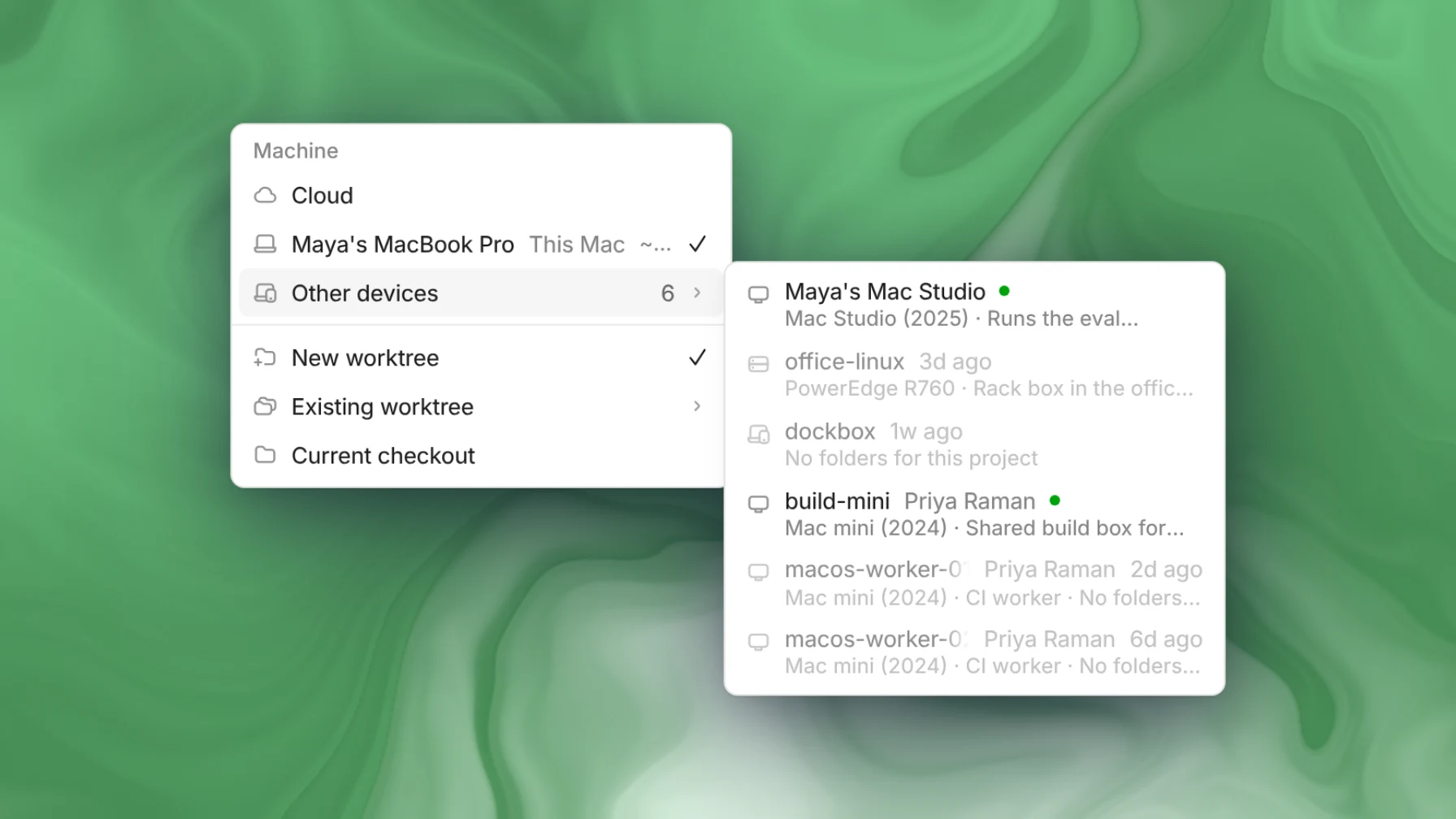
Start a Capy thread from the web app, desktop app, Slack (@Capy), a delegated Linear issue or the API. Locally, the Capy desktop app (macOS, Windows and Linux) runs threads in a folder on your computer with your installed tools and credentials at $0 machine time (model usage bills the same as in the cloud). The Machine menu picks Cloud, another paired device or this computer, defaulting to New worktree (forking a fresh git worktree from the latest remote base branch without touching your branch), beside Existing worktree and Current checkout. The Dock CLI (capy dock) pairs Linux, macOS or Windows machines such as build servers with no desktop app and $0 machine time.
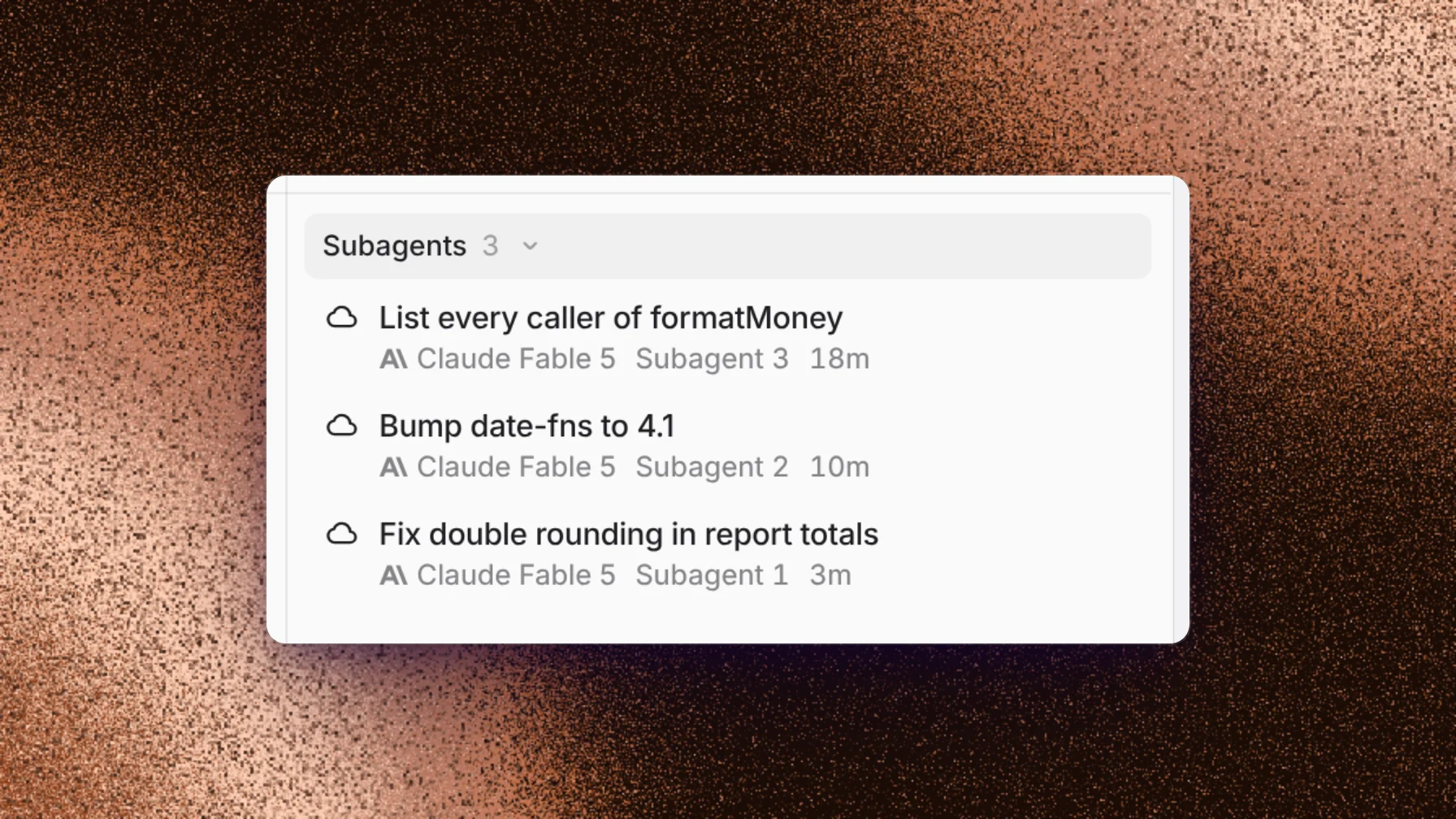
In the cloud, every thread runs in its own Ubuntu 24.04 Firecracker microVM that keeps working after your laptop closes, and “Continue on” moves a thread between cloud and local while keeping its conversation, subagents and PRs intact. Multi-part work splits across parallel subagents, each with its own conversation and usually its own machine while read-only subagents share the parent’s machine.
Teams replacing 1Code’s cloud sandboxes get explicit machine sizes and concurrency caps. Against Conductor Cloud’s 8 vCPU, 16 GB RAM, 32 GB NVMe Vercel sandbox, Capy’s default Large machine matches the RAM with half the vCPUs and double the disk at $0.40 an hour, Ultra on Pro matches the vCPUs with double the RAM, and Hyper on Max delivers double the vCPUs, four times the RAM and four times the disk self-serve.
| Machine | vCPU | RAM | Disk | Per hour | Availability |
|---|---|---|---|---|---|
| Capy Small | 1 | 4 GB | 64 GB | $0.10 | Lite and up |
| Capy Medium | 2 | 8 GB | 64 GB | $0.20 | Lite and up |
| Capy Large (default) | 4 | 16 GB | 64 GB | $0.40 | Lite and up |
| Capy Ultra | 8 | 32 GB | 64 GB | $0.80 | Pro and up |
| Capy Hyper | 16 | 64 GB | 128 GB | $1.60 | Max and up (self-serve) |
| Capy Big Guy | 16 | 128 GB | 256 GB | $3.20 | On request |
| Conductor Cloud | 8 | 16 GB | 32 GB | Unpublished | Pro, Teams, Enterprise |
Org-wide awake RAM scales from 128 GB on Lite (8 Large at once) to 512 GB on Pro (32 Large) and 1 TB on Max (64 Large), with 1 TB or as agreed on Enterprise; sleeping machines cost nothing. On Pro, Max and Enterprise, Capy also attaches cloud iOS ($5.40 an hour) and Android ($3.60 an hour) phones while awake, building mobile apps on Revyl’s runners and tapping through them. You can steer threads from any phone’s browser or Capy’s iOS app in TestFlight beta.
Captains, native Issues and Drive replace a flat Kanban board
1Code tracked parallel chats in a Kanban view, and Devin Desktop kept that board model. Capy separates tracking and supervision into a native Issues page and Captains that run crews of threads so you do not have to poll every column.
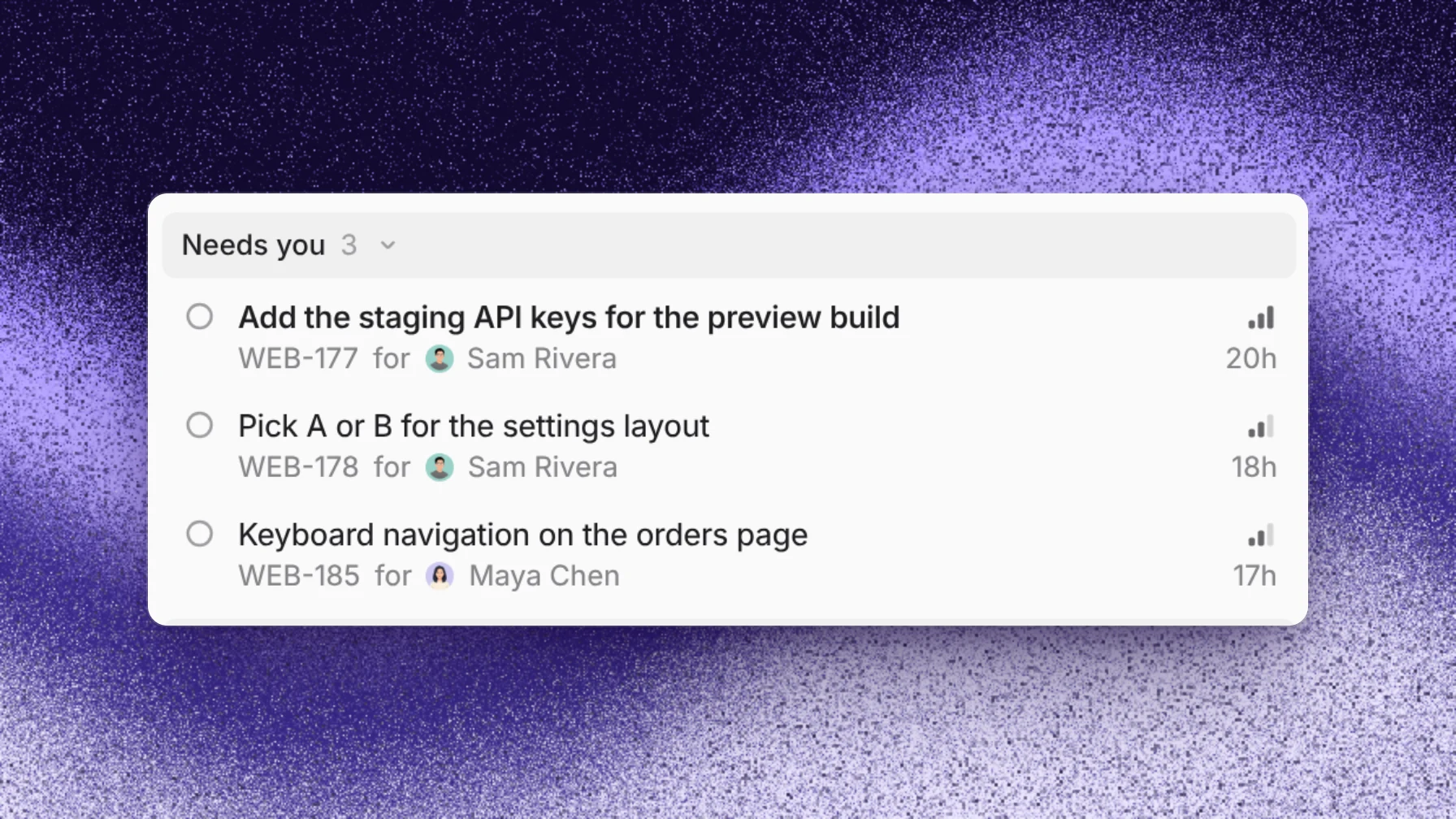
A Captain is a long-lived agent that starts full crew threads (each with its own machine, model and subagents), reads their reports and rewrites a digest of what needs you, what is new and what is in progress. Its Overview puts the first five “Needs you” decisions above work in progress while the Digest tab holds the full record. It tags you only for decisions, you steer from its chat (“merge #3780”, “hold the migration until Monday”), and every Captain owns a Drive shared with its crew (AGENTS.md, CREW.md read on every turn, NOTES.md, DIGEST.md, skills/, plus reports/, renders/ and handoffs/). The Pull requests page filters by Captain.
Beside Captains, Capy’s native Issues page holds title, description, state, assignees and custom org states and labels. Threads and pull requests attach to an issue, one parent per issue creates sub-issues showing how many are closed, and Captains and threads create, update, comment on and close issues, with any comment waking the owning thread. Outside git, Capy Drive stores cross-repo rules, skills, checklists, reference files and automation state across Organization, Personal, Project, Project + personal, Automation and Captain scopes, keeping 24-hour History with Restore and storage from 1 GB on Free to 10 GB on Lite, 25 GB on Pro and 50 GB on Max.
Moving over from Claude Code or Codex is direct: the Capy desktop app imports local Claude Code and Codex sessions, Capy reads a root CLAUDE.md as a fallback for AGENTS.md, skills copy into .agents/skills/ (matched automatically or called via $skill-name in the composer or Slack), and MCP servers import from Claude Code mcpServers JSON or Codex TOML.
Capy replaces 1Code’s PR auto-review with full PR ownership
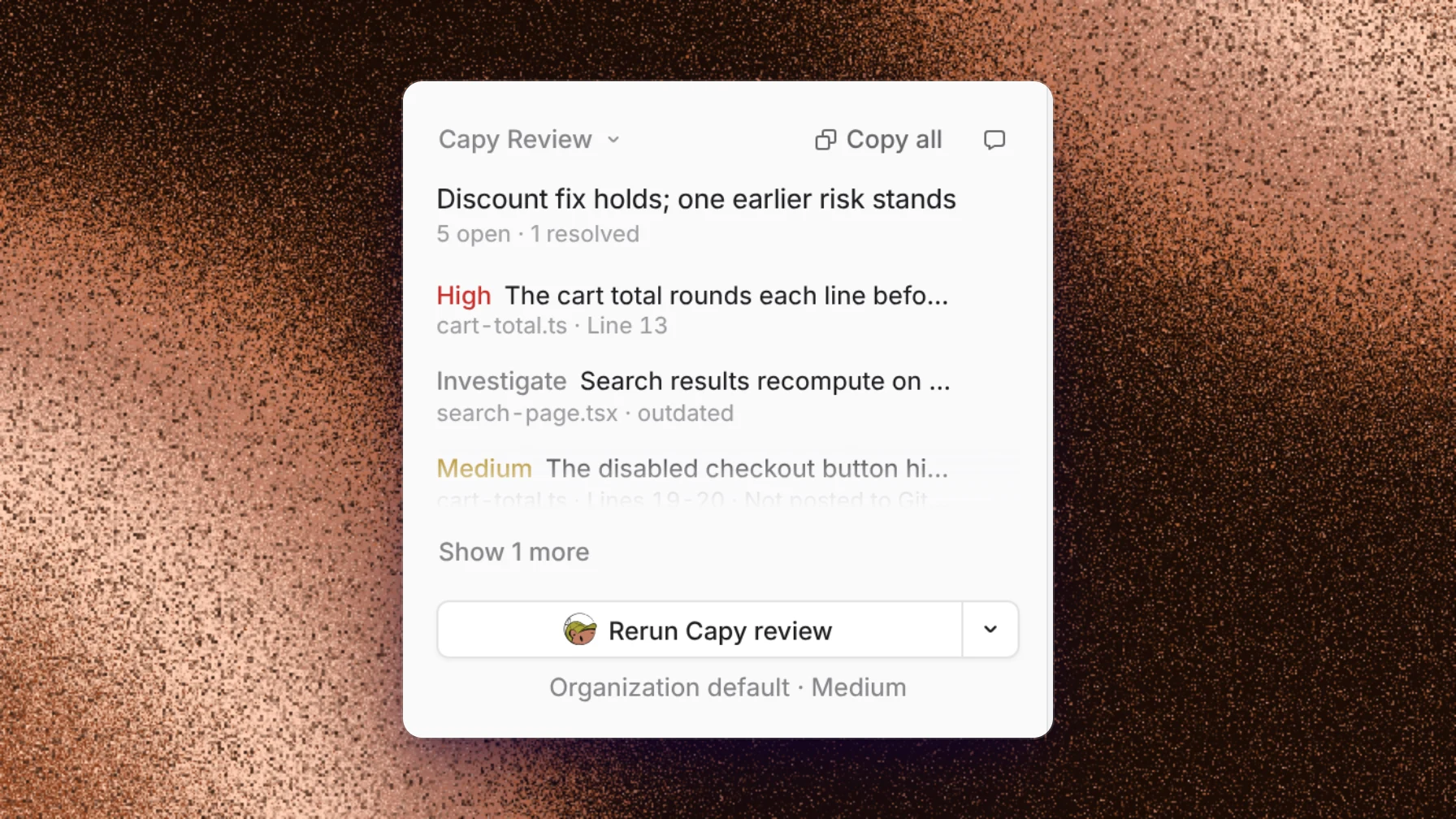
Where 1Code shipped basic PR auto-review, Capy pairs a dedicated review agent with a pull request board and owning-thread fixes. The review agent checks out the PR’s exact head in a real environment, enforces AGENTS.md conventions, posts inline GitHub comments and records every finding in Capy. Per repo, you set automatic review to Off, Once (on open) or Every push, or trigger @capy review.
Findings carry triage states (Open, Resolved or Irrelevant); marking one resolved or irrelevant resolves the GitHub thread, and incremental re-reviews skip irrelevant items. When a Capy thread owns the PR, it triages reviews automatically, fixes high-severity findings, clears failing CI, answers feedback and resolves conflicts before reporting ready. Capy’s Pull requests page tracks every PR across projects, filterable by Captain, and opening a PR shows Overview, diff, checks, findings and an auto-generated Guide: what the change does, a before-and-after diagram of the touched path, and chaptered diffs (toggleable by admins). Automations run stored prompts on cron schedules in your timezone, GitHub events, Slack messages, webhooks or on demand, each launching a normal thread in run history.
On Capy pricing, every plan includes unlimited members at $0 per seat, returning each paid plan’s full price as included model usage on top of monthly machine minutes and review credits: Free ($0, local with your own keys plus 100 review credits), Lite ($20 a month, $16 annually, $1 for 7 days with a verified card; $20 usage, 30,000 machine minutes, 250 review credits), Pro ($100, $80 annually; $100 usage, 150,000 minutes, 1,250 credits), Max ($200, $160 annually; $200 usage, 300,000 minutes, 2,500 credits) and custom Enterprise. One machine minute equals one minute on 1 vCPU / 4 GB (Large uses 4 per minute, Hyper 16, so Max’s 300,000 minutes cover 1,250 Large hours or about 312 Hyper hours), with overage at $0.10 per 60 machine minutes. Review credits cost 1 at Low, 5 at Medium and 10 at High; default Flex runs first reviews at Medium and follow-up pushes at Low, giving Lite 50 first Medium reviews ($0.40 per Medium review on Lite, Pro and Max, no seats), and extra reviews bill Capy credits for actual model tokens and machine time (never on your own keys).
On Capy credits, models from Anthropic, OpenAI, Google and xAI bill at the provider’s list price, and Capy also lists models such as Kimi, DeepSeek and Qwen in its picker. Your own Codex, GitHub Copilot or SuperGrok subscription and API keys or gateways work on every plan, Free included, with no charge or markup. Capy is SOC 2 Type II on every plan, and Enterprise adds BYOC on request, ZDR on request, SSO/SAML (included on Enterprise; $100 a month add-on on Lite, Pro and Max), an admin audit log and 24/7 Slack Connect SLA support. Git hosting is GitHub.com only.
Conductor is the closest Mac match, and it’s joining Meta
Conductor pitches itself directly: “Run a team of coding agents in the cloud.” Its desktop app runs first-party Claude Code, Codex, Cursor and OpenCode agents in parallel using your own subscriptions and keys, then helps you review diffs, open pull requests and merge.
Each workspace is a separate checkout made with Git worktrees on its own branch. Conductor runs on macOS; you authenticate Claude Code and Codex directly (claude /login, codex login), while Cursor uses an API key. Multiplayer lets teammates share a workspace link and prompt together, alongside an iOS app and the Conductor API.
Local sessions stop if you close the app or shut down. Per Conductor’s Cloud FAQ, cloud workspaces run in a Vercel sandbox (8 vCPUs, 16 GB RAM, 32 GB NVMe) on Pro, Teams and Enterprise plans with no extra cloud fee right now, though usage-based compute pricing is planned and Team plans are invite-only. Conductor’s announcement states “Conductor is joining Meta” and promises “something new for you to use early next year.” A line saying Conductor Cloud would shut down is struck through and replaced with “Plans have changed! We’ll still be developing Conductor.”, and its FAQ says Conductor “will keep working as normal”.
Devin Desktop brings a Kanban view and third-party CLI agents
Cognition renamed Windsurf to Devin Desktop, putting its Kanban interface front and center alongside Spaces for shared agent context. The Agent Command Center manages local editor sessions and cloud Devin VMs in one view and can send an OS notification when a session finishes or needs input (off by default). Downloads cover Mac, Windows and Linux.
Devin Local worktrees launch sessions in new or existing git worktrees and merge changes back into your workspace. Through the Agent Client Protocol (ACP), Devin Desktop runs Codex CLI, Claude Agent, OpenCode, Junie and Gemini CLI with billing staying directly between you and that provider. ACP agents ship on Free, Pro, Max and Teams (off by default on Enterprise), with Devin pricing starting at Free ($0) and Pro ($20 a month).
Codex in the ChatGPT desktop app covers local worktrees and cloud tasks
The ChatGPT desktop app runs parallel projects across macOS, Windows and Linux, switching between ChatGPT and Codex. Worktrees isolate concurrent chats locally or on remote dev environments; Handoff moves chats between Local and Worktree, the ChatGPT mobile app approves and reviews worktree chats, and scheduled tasks run on dedicated background worktrees.
Codex Cloud runs tasks in isolated cloud workspaces while your computer sleeps, on GitHub or GitLab (beta). Per Codex pricing, Codex is included in ChatGPT Free, Go, Plus, Pro ($100, $200 or $500 a month), Business, Edu and Enterprise plans, sharing pricing and usage limits with ChatGPT Work on OpenAI models.
Claude Code desktop runs parallel Claude sessions with built-in panes
In the Code tab of Claude Desktop, each conversation is an isolated session with its own project folder, running parallel local, cloud or SSH sessions on macOS and Windows with Linux in beta.
Worktree mode isolates a session in its own Git worktree (off by default, configurable per saved local or SSH environment), alongside built-in panes for chat, diff, browser, terminal, file, plan, tasks and subagents. Claude Code desktop runs Claude only; on Claude’s Team plan (2 to 150 people), a standard seat is $20 a month annually ($25 monthly) and a premium seat is $100 annually ($125 monthly).
Cursor puts worktrees and cloud agents inside the editor
Cursor’s Agents Window spans local, cloud and remote SSH environments with multi-workspace support, a diffs view, parallel cloud agents (also reachable from phone, web, Slack, GitHub and Linear), local-to-cloud handoff and cloud subagents.
Cursor Worktrees isolate agents in their own Git checkouts from the Agents Window, with setup scripts in .cursor/worktrees.json. Cloud Agents run in isolated cloud VMs without your laptop. On August 14, 2026, Cursor announced it is now part of SpaceX.
Where another replacement fits better
- First-party CLI runtimes in worktrees. Pick Conductor on macOS if you want native Claude Code, Codex, Cursor and OpenCode binaries with your own accounts and are comfortable with its Meta move. Pick Devin Desktop across Mac, Windows or Linux for a Kanban board with third-party CLI agents over ACP.
- Single-lab teams. Pick Codex in the ChatGPT desktop app for OpenAI-only work with GitLab (beta) support or scheduled local worktrees inside ChatGPT plans. Pick Claude Code desktop if you only ran Claude Code in 1Code and want Anthropic’s local, cloud and SSH panes.
- Editor-first workflow. Pick Cursor if you want Git worktrees, Cloud Agents and local code editing in one IDE, or need GitLab, Bitbucket or Azure DevOps.
- OS support and team seats. Conductor is macOS only with invite-only Teams, and Claude Team bills per seat. Capy, Devin Desktop, Cursor and the ChatGPT desktop app support macOS, Windows and Linux, and Capy charges $0 per seat for unlimited members.
You can try Capy beside your current workflow
Start on Capy Free ($0) on macOS, Windows or Linux, import your local Claude Code or Codex sessions, connect your Codex, GitHub Copilot or SuperGrok subscription or API keys, and run threads in fresh local git worktrees with 100 monthly review credits included. Turn on Once or Every push review on a GitHub.com repo, then try Lite ($1 for 7 days) or Pro to run threads and Captains on Firecracker cloud VMs across your team, with more Drive storage and review credits.
Frequently Asked Questions
What happened to 1Code?+
What is the closest 1Code alternative?+
Can I still run 1Code?+
Can I bring my Claude Code or Codex setup to Capy?+
How do Capy’s cloud VMs compare with Conductor Cloud?+
What does Conductor joining Meta mean for users?+
Which 1Code alternatives support Windows and Linux?+
Sources
- 21st-dev/1code on GitHub
- 1Code releases on GitHub
- 1code.dev
- Conductor
- Conductor docs
- Conductor docs: Installation
- Conductor docs: Workspaces and branches
- Conductor docs: Cloud FAQ
- Conductor: Conductor is joining Meta
- Cognition: Windsurf is now Devin Desktop
- Devin docs: Agent Command Center
- Devin docs: Agent Client Protocol
- Devin docs: Devin Local worktrees
- Devin docs: Welcome to Devin Desktop
- Devin pricing
- ChatGPT docs: ChatGPT desktop app
- ChatGPT docs: Worktrees
- ChatGPT docs: Codex Cloud
- ChatGPT docs: Codex pricing
- Claude Code docs: Desktop
- Claude pricing
- Cursor docs: Agents Window
- Cursor docs: Worktrees
- Cursor docs: Cloud Agents
- Cursor blog: Cursor is now a part of SpaceX
- Capy docs: Desktop app and devices
- Capy docs: Machines
- Capy docs: Captains
- Capy docs: Drive
- Capy docs: Reviews
- Capy docs: Models and pricing
Spotted something out of date? Tell us at support@capy.ai.
Try Capy for parallel agents
Connect a GitHub.com repository and run threads in local git worktrees or cloud VMs, with your own Codex, GitHub Copilot or SuperGrok subscription.


- What to look for in a 1Code replacement
- Capy pairs local git worktrees with cloud VMs up to 64 GB
- Captains, native Issues and Drive replace a flat Kanban board
- Capy replaces 1Code’s PR auto-review with full PR ownership
- Conductor is the closest Mac match, and it’s joining Meta
- Devin Desktop brings a Kanban view and third-party CLI agents
- Codex in the ChatGPT desktop app covers local worktrees and cloud tasks
- Claude Code desktop runs parallel Claude sessions with built-in panes
- Cursor puts worktrees and cloud agents inside the editor
- Where another replacement fits better
- You can try Capy beside your current workflow
- FAQ
- Sources