





Cursor alternatives for cloud agents
How Capy, Codex, GitHub Copilot and Devin run cloud coding agents, what each costs, and when to stay with Cursor.


Cursor’s Background Agents are now called Cloud Agents, and they run parallel coding sessions inside isolated cloud VMs with full development environments, desktop control and multi-repo support.[1][2] Since August 2026, Cursor has also been part of SpaceX, sold to new customers through The X Subscription where Cloud Agents start at Premium ($30 a month) and third-party models bill separately at API list prices.[3][4][5] So it’s a good moment to compare other cloud coding agents on git-host support, model choice and pricing.
Four live platforms cover the main alternatives today. Capy runs multi-model agent swarms on GitHub.com with unlimited team members and lets you connect your own Codex, GitHub Copilot or SuperGrok subscriptions.[6][7] OpenAI Codex cloud rides on your ChatGPT plan across GitHub and GitLab.[8][9] GitHub Copilot in the cloud runs background tasks inside GitHub.com and GitHub Actions.[10] Devin connects to GitHub, GitLab and Bitbucket and adds GUI computer use across Linux, Windows and Android.[11][12]
Every fact about each product below comes from its own docs, pricing page or changelog, checked on November 20, 2026. The numbers in brackets link to the sources at the end.
Cursor’s Cloud Agents run full VMs, now under SpaceX
Cursor pairs its desktop editor with a full cloud execution layer.[1] Its Cloud Agents, formerly called Background Agents, boot isolated Ubuntu VMs in the cloud with cloned repositories, installed dependencies, secrets, startup commands and network access.[1][18] You can run as many agents in parallel as you want without keeping your laptop online, and each agent can build, test and interact with the changed software through desktop and browser computer use.[1]
Environments come from agent-led setup or a Dockerfile in .cursor/environment.json, while Builds prepare those environments in the background.[18] Cloud Agents work in multi-repo environments spanning frontend, backend, infrastructure or shared-library repositories, opening pull requests in every repo they modify.[1] Source control covers GitHub (Cloud and Enterprise Server), GitLab (Cloud and Self-Hosted), Bitbucket Cloud and Azure DevOps, alongside outbound domain restrictions, private networks via Tailscale and self-hosted machines for tool execution.[1]
You can start a Cloud Agent from Cursor Desktop, Cursor Web (cursor.com/agents), Cursor for iOS, Slack (@cursor), a GitHub PR or issue comment, a Bitbucket PR comment (@cursor), Linear or the API.[1] Agents support HTTP and stdio MCP servers with OAuth and command hooks in .cursor/hooks.json, and attach screenshots, videos and logs to pull requests.[1][2] Remote desktop control lets you take over an agent’s desktop and hand control back, and teammates on the same Cursor team can view a shared agent URL in read-only mode, or post follow-ups when admins enable team follow-ups.[1][2]
Ownership and pricing changed in 2026. On August 14, 2026, Cursor announced on its blog that it had officially been acquired by SpaceX, completing a process that started in April with a partnership with SpaceXAI.[3] New customers now start on The X Subscription, which combines Grok, Cursor and X so Grok and Cursor share a weekly included usage pool; existing customers can keep their current plan, and switching is permanent.[5] Cloud Agents, automations, code hosting via Origin and AI code reviews via Bugbot start at Premium ($30 a month), alongside Super ($100 a month), Ultra ($200 a month), Teams ($30+ per user a month) and custom Enterprise plans.[1][4] Free ($0) and Plus ($8 a month) plans do not include Cloud Agents.[1][4] Cloud Agents run on a curated selection of models with a selectable context window size, and third-party models are excluded from monthly plan prices: they bill at API list prices from the first use out of prepaid credit. You set a spend limit the first time you use Cloud Agents.[1][4][5]
Capy runs a crew of cloud agents on any model
Capy is a platform built around agent swarms for your engineering team. Every cloud thread runs on its own Linux VM (a Firecracker microVM running Ubuntu 24.04) where the agent clones your repositories, runs commands, edits code and streams a Chrome desktop into the thread pane.[13] Per-repository setup scripts, startup processes, commands and snapshots configure the environment so the agent can run your code and tests.[19] Start a thread from the web app, desktop app, Slack (@Capy), a delegated Linear issue or the API, and it keeps working after you close your laptop.[20][21] The thread wakes itself when CI finishes, a review lands or a pull request merges, and you can steer a busy agent without stopping it.[20]
Multi-part work splits across subagents that run in parallel, each with its own conversation and usually its own machine, while read-only subagents can share the parent’s machine.[14]
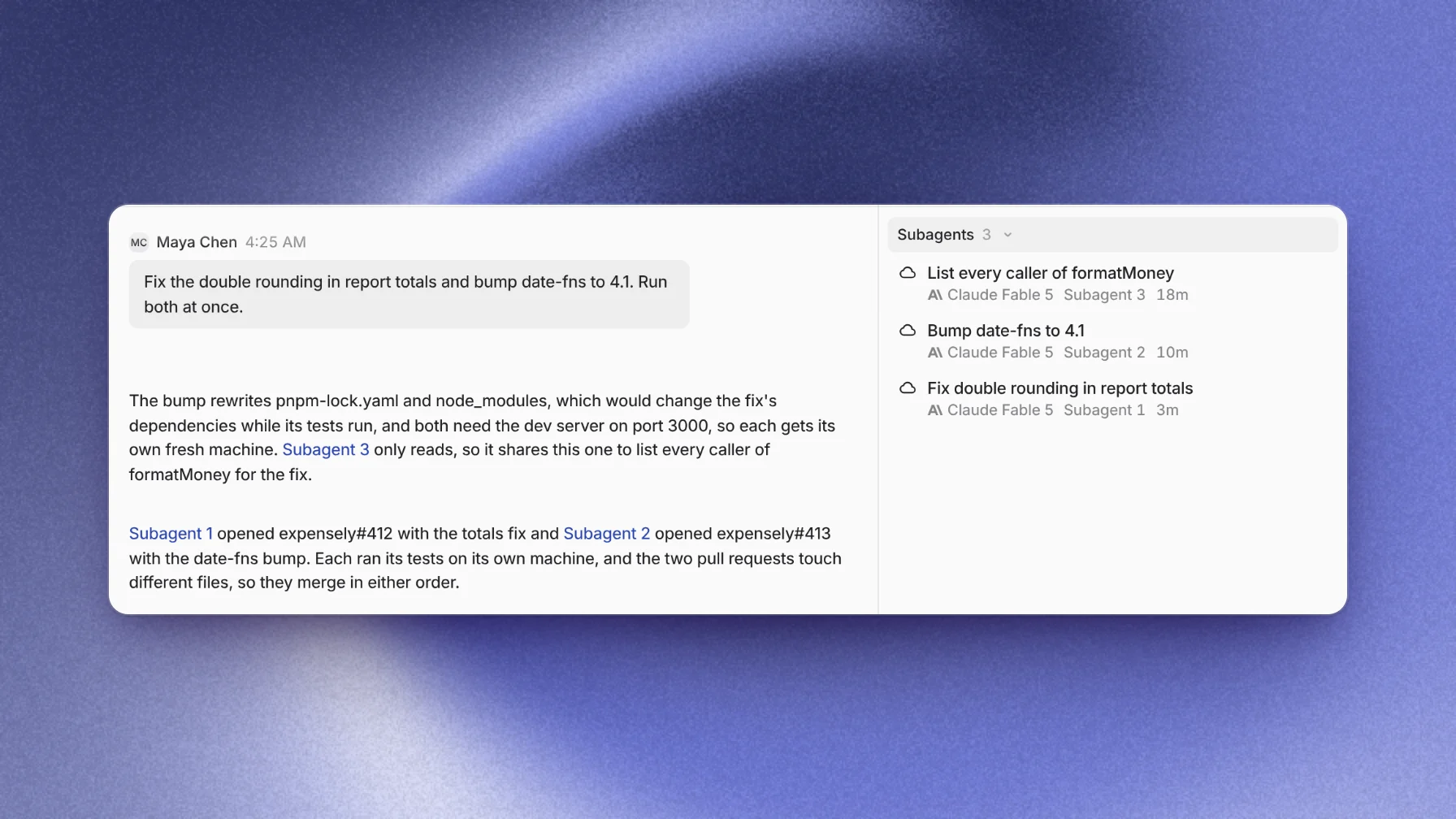
At a higher level, a Captain is a long-lived agent that runs a crew of threads for you, reads their reports and surfaces only what needs your attention in a digest.[22] Automations run a stored prompt on a schedule, a webhook, or a GitHub or Slack event.[23] Once a thread opens a pull request, that thread owns it through merge: it fixes failing CI, answers review feedback, resolves conflicts and wraps up after the merge.[15] Capy’s review agent posts findings on pull requests, and the thread that opened the PR triages them and fixes high-severity findings.[24]
When work calls for local tools or credentials, the Capy desktop app (macOS, Windows and Linux) runs threads in a folder on your own computer with no machine-time charge, and moves a thread to a cloud machine and back whenever you switch.[25]
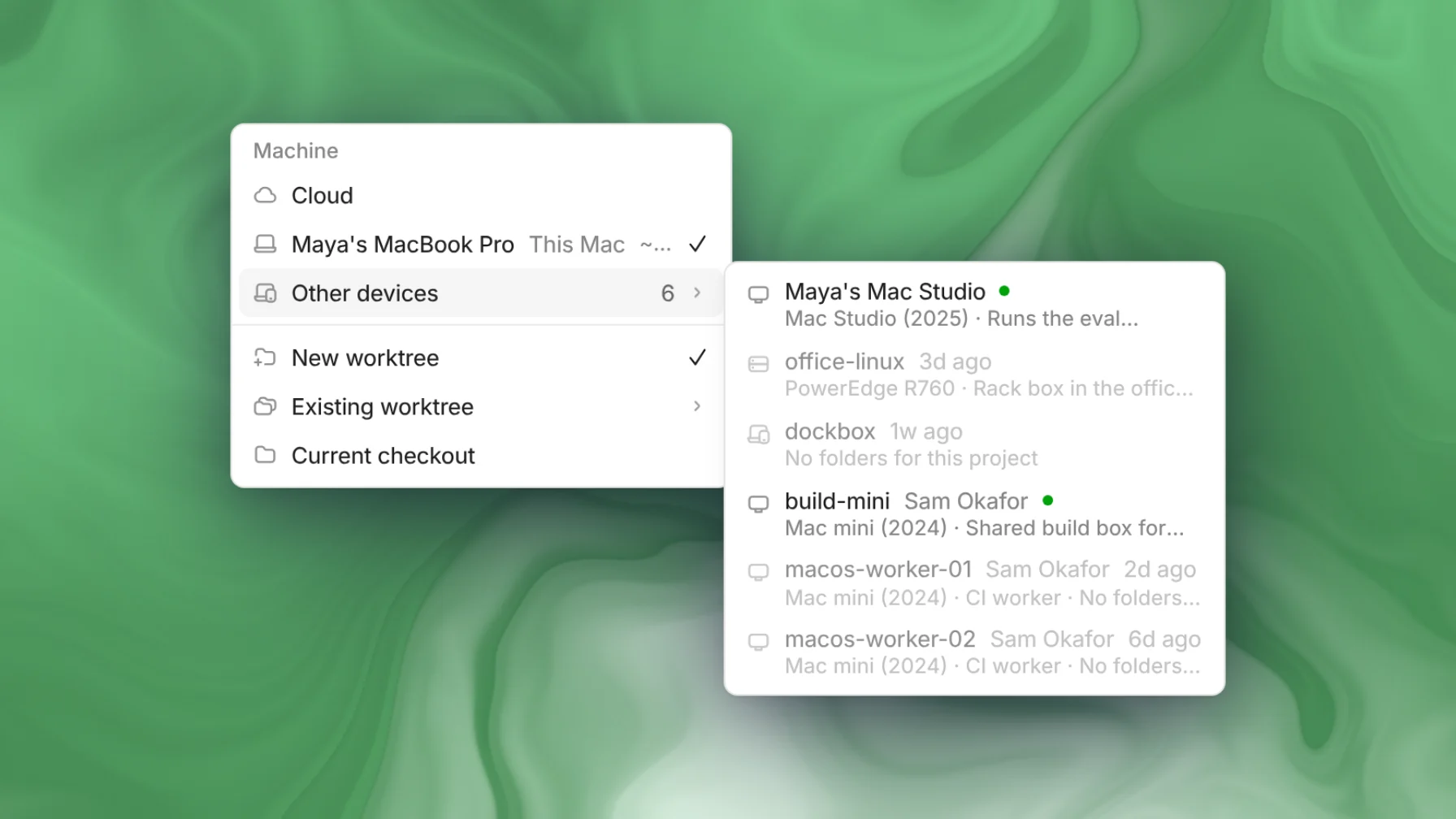
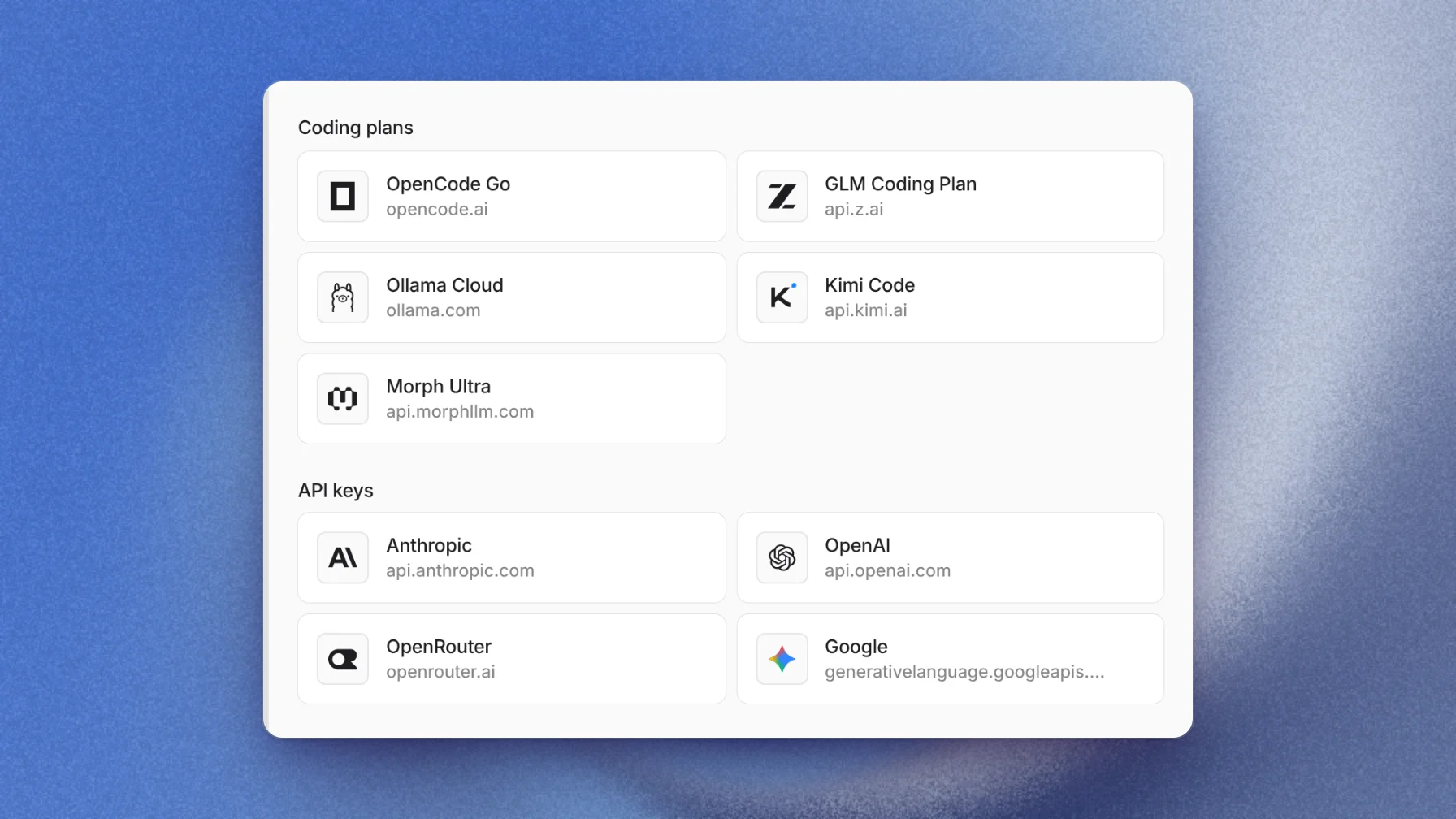
Capy charges no per-seat price, with unlimited members on every plan, Free included. Free runs threads locally with your own subscriptions and keys and includes 100 review credits a month, with no machine minutes or model usage; paid plans (Lite, Pro and Max) include monthly machine minutes, review credits and model usage.[7] Tiers are Free, Capy Lite at $20 a month, Pro at $100 a month, Max at $200 a month and custom Enterprise, with 20% off on annual billing.[7] Models on Capy credits span Anthropic, OpenAI, Google, xAI, Moonshot, DeepSeek, Meta and more at providers’ list prices with no markup.[7] Your own subscriptions and API keys also work on every plan, the free plan included, with no charge or markup on their tokens: a connected Codex, GitHub Copilot or SuperGrok subscription runs the models its plan includes against that plan’s limits, while machine time past your plan’s included machine minutes still bills Capy credits.[7]
Git hosting is the main boundary: Capy works with repositories on GitHub.com, and GitHub Enterprise Server and other git hosts are not supported.[6] Pick Capy when your repositories live on GitHub.com, you want parallel cloud threads and Captains running across multiple model providers, and you want unlimited team members with zero markup on your existing subscriptions.[6][22][7]
OpenAI Codex cloud comes with your ChatGPT plan
Codex Cloud runs coding tasks in the cloud, from investigating bugs to building features, and lets you review and continue from the web, mobile or desktop app.[8] Each task has its own workspace and keeps running while your computer is asleep.[8] You can start without a repository or check out any repository available through your connected GitHub or GitLab account, then inspect changed files, request follow-ups, commit or open a pull request.[8] Teams can publish reusable environments with network secrets and allowed destinations, launch cloud work from the CLI, or switch to cloud execution inside ChatGPT through Work in > Cloud.[8]
Codex is included in ChatGPT Free, Go, Plus, Pro, Business, Edu and Enterprise plans, sharing pricing, credits and usage limits with ChatGPT Work.[9] ChatGPT Plus is $20 a month and covers Codex on the web, CLI, IDE extension and iOS, plus cloud integrations such as automatic code review and Slack; Pro plans are $100, $200 or $500 a month.[9][16] Models are OpenAI’s (Plus lists GPT-6.1 Sol and GPT-6 Luna), cloud tasks may use more of your allowance than local messages, and API-key use excludes cloud-based features such as GitHub code review and Slack.[9]
Pick Codex cloud when your team already subscribes to ChatGPT, standardizes on OpenAI models, and wants GitHub or GitLab cloud tasks billed inside one shared ChatGPT allowance.[8][9]
GitHub Copilot runs cloud sessions inside GitHub.com
Copilot on GitHub.com researches a repository, plans changes and implements them in the background, editing files and running tests and linters in a cloud development environment.[10] You review proposed changes and ask for refinements before creating a pull request, or ask for a pull request directly in your prompt.[10] Since October 28, 2026, paid Copilot plans include the new “Copilot in the cloud” experience, which lets you move a session between web or mobile and local clients including the Copilot app, VS Code and Copilot CLI.[10]
You choose among three environment types: a cloud sandbox whose sessions can span repositories in one organization, a GitHub Actions-based environment supporting custom compute, network setup and self-hosted runners, or a Remote custom environment.[10] Agent Merge watches a pull request and works on failed GitHub Actions workflows, merge conflicts, or both; Copilot code review reviews pull requests, and Automations run tasks on a schedule or repository events.[10]
Because it is GitHub’s own product, it runs on repositories on GitHub, and it is not currently available for GitHub Enterprise Server.[10][17] Paid plans bill usage in GitHub AI Credits: Copilot Pro is $10 a month, Pro+ $39, Max $100, Business $19 per granted seat and Enterprise $39 per granted seat a month.[17]
Pick GitHub Copilot in the cloud when your repositories and CI already live on GitHub.com, you want background agents running on GitHub Actions or self-hosted runners, and you want low-cost entry on Pro or per-seat Business billing.[10][17]
Devin adds GUI computer use across three git hosts
Devin Cloud runs parallel agents in secure cloud VMs (“Close your laptop, come back to finished PRs”), with browser, terminal and GUI computer use on Linux, Windows or Android.[11] It is model-agnostic, routing across frontier models from Anthropic, OpenAI, Google and Cognition.[11] Devin includes pull request review and event-driven automations triggered by Slack mentions, Linear issues, CI failures, Snyk alerts or PagerDuty incidents.[11]
In the CLI, devin --cloud launches a cloud session on its own VM with a shell, browser and repository clones; /handoff moves a session between local and cloud, and /ssh opens a shell on the session’s VM.[26] On June 2, 2026, Windsurf became Devin Desktop, an IDE with an agent command center that manages local and cloud agents from a Kanban view and runs ACP-compatible agents such as Codex and OpenCode.[27] Integrations cover Slack and Teams, Linear and Jira, and GitHub, GitLab and Bitbucket.[12]
Devin lists Free at $0, Pro at $20 a month (including access to cloud agents and Devin Cloud, extra usage at API pricing, and support for using your ChatGPT plan), Max at $200 a month, Teams starting at $80 a month for up to 100 users, and custom Enterprise plans with VPC deployment and SCIM.[12] Usage allowances refresh daily and weekly.[12]
Pick Devin when you need cloud agents across GitHub, GitLab or Bitbucket, GUI computer use on Windows or Android alongside Linux, or an Enterprise deployment inside your own VPC.[11][12]
Google Jules is winding down on December 31, 2026
Google announced on October 29, 2026 that Jules winds down on December 31, 2026.[28] Sessions could continue until November 11, 2026, and Jules is read-only through the end of the year while Google directs teams to its agent-first platform, Google Antigravity.[28] You can export settings, environment variables, scheduled tasks, repositories, memories, setup scripts and sessions with Jules Tools, and your code, branches and pull requests stay in GitHub.[28]
Stay with Cursor for editor handoff and other git hosts
Cursor is the better choice when you want local editing and remote cloud agents inside one editor. Moving from Cursor Desktop to a Cloud Agent, inspecting screenshots, videos and logs attached to the pull request, and taking remote desktop control of the VM before handing control back all stay inside one tool.[1][2]
Cursor also leads on git-host and network breadth. Cloud Agents connect to GitHub (Cloud and Enterprise Server), GitLab (Cloud and Self-Hosted), Bitbucket Cloud and Azure DevOps, run multi-repo cloud environments, reach private networks through Tailscale and run tool execution on self-hosted machines.[1] Existing customers can keep their legacy Cursor plan. Under The X Subscription, Grok and Cursor share a weekly included usage pool, alongside Origin code hosting and Bugbot code reviews starting at Premium ($30 a month).[4][5]
You can run Capy beside Cursor on the same repo
You do not need to give up Cursor’s editor to try Capy’s cloud agents. Both platforms run on the same GitHub.com repository at the same time.[1][6] Connect a GitHub.com repository to Capy, add your per-repository setup scripts, startup processes and snapshots, and invite your whole team with no per-seat charge.[19][6][7]
Connect an existing Codex, GitHub Copilot or SuperGrok subscription, or your own API key, to run threads with zero token markup. The free plan runs threads on your own computer with your subscriptions and keys, and paid plans add monthly machine minutes for cloud machines.[7] Dispatch parallel work from the web app, desktop app, Slack or Linear, and let Capy’s threads take pull requests through CI, review findings and merge while you keep editing locally in Cursor.[21][25][15][24]
Frequently Asked Questions
What is the best Cursor cloud agents alternative?+
Does Cursor still have Background Agents?+
What do Cursor Cloud Agents cost now?+
Is Cursor owned by SpaceX?+
Can I use my ChatGPT, Codex or GitHub Copilot subscription in Capy?+
Does Capy work with GitLab or Bitbucket?+
Is Google Jules shutting down?+
Sources
Checked against each product's own docs and pricing on November 20, 2026.
- 1Cursor docs: Cloud Agents
- 2Cursor docs: Cloud agent capabilities
- 3Cursor blog: Cursor is now a part of SpaceX
- 4Cursor pricing
- 5Cursor help: What is The X Subscription?
- 6Capy docs: GitHub
- 7Capy docs: Models and pricing
- 8OpenAI docs: Codex Cloud
- 9OpenAI docs: Codex pricing
- 10GitHub docs: Copilot on GitHub.com
- 11Devin Cloud
- 12Devin pricing
- 13Capy docs: Machines
- 14Capy docs: Subagents
- 15Capy docs: Pull requests
- 16ChatGPT pricing
- 17GitHub docs: Plans for GitHub Copilot
- 18Cursor docs: Cloud agent setup
- 19Capy docs: Environment
- 20Capy docs: Threads
- 21Capy docs: Welcome
- 22Capy docs: Captains
- 23Capy docs: Automations
- 24Capy docs: Reviews
- 25Capy docs: Desktop app and devices
- 26Devin docs: Devin Cloud in the CLI
- 27Cognition: Windsurf is now Devin Desktop
- 28Jules changelog: Jules Turndown
Spotted something out of date? Tell us at support@capy.ai.
More comparisons
- 1Code alternatives for parallel coding agents1Code’s repository is archived and 1code.dev is offline. How Capy, Conductor, Devin Desktop, Codex, Claude Code desktop and Cursor replace it.
- Aider alternativesSeven coding agents compared with Aider: where each one runs, how each one charges, and when Aider is still the right tool.
- Best AI code review toolsEleven AI pull request reviewers compared on git hosts, automatic reviews, fix loops and pricing, from each product’s own docs.
- Best AI coding agents in 2026: 12 tools comparedWhere twelve hosted and open-source AI coding agents run, how each charges, and when to pick each one.
- Best cloud coding agents in 2026How Capy, Devin, Cursor, Codex Cloud, GitHub Copilot, Kiro and Jules handle cloud machines, parallel work, pull requests, testing and pricing.
- Capy vs AmpWhat Amp is after its Sourcegraph spin-out, how both run parallel cloud agents, and how their pricing, models and pull request loops compare.
- Capy vs CodeRabbitWhere each one reviews, how each one charges, and what happens to a finding after it posts.
- Capy vs CodexWhere each coding agent runs, which models it uses, and how each one bills.
- Capy vs ConductorWhere each one runs your agents, how they handle GitHub pull requests, and how each scales past a single Mac.
- Capy vs DevinHow each one runs teams of coding agents, where they execute, what they cost, and which git hosts and models each supports.
- Capy vs GitHub CopilotWhere each coding agent runs, what happens after a pull request opens, and how each one bills.
- Roo Code alternativesSeven coding agents that replace Roo Code after its May 2026 shutdown, across VS Code, terminals and cloud machines.
- Capy CaptainsHow a Captain runs a crew of threads, reads their reports and sends a digest of what needs you.
Try Capy beside Cursor
Connect a GitHub.com repository and run threads with your own Codex, GitHub Copilot or SuperGrok subscription.


- Cursor’s Cloud Agents run full VMs, now under SpaceX
- Capy runs a crew of cloud agents on any model
- OpenAI Codex cloud comes with your ChatGPT plan
- GitHub Copilot runs cloud sessions inside GitHub.com
- Devin adds GUI computer use across three git hosts
- Google Jules is winding down on December 31, 2026
- Stay with Cursor for editor handoff and other git hosts
- You can run Capy beside Cursor on the same repo
- FAQ
- Sources